


Precision Power for Compact Machines: Comprehensive Overview of XPA Precision Belt for Small Machinery
2025-08-17
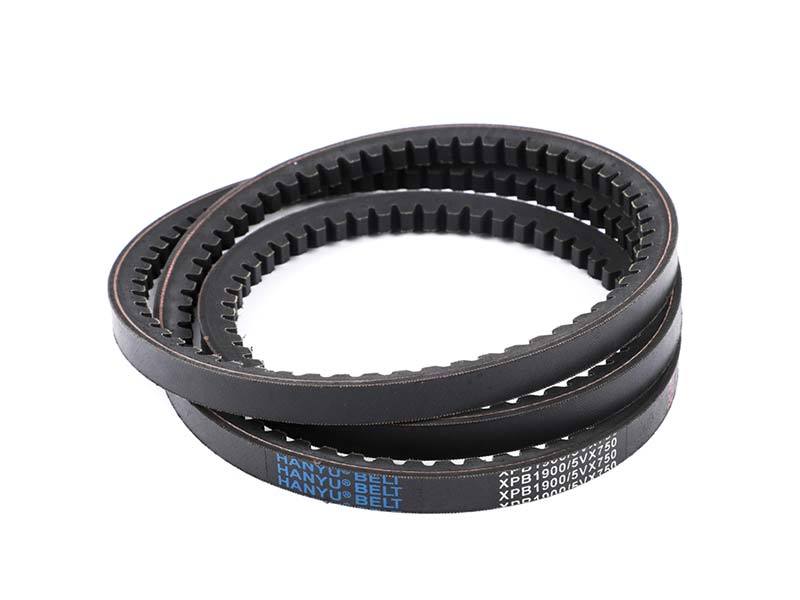
The XPA precision belt is a high-performance timing belt specifically engineered for small machinery and compact mechanical systems that demand accuracy, reliability, and long service life. Designed according to the European DIN/ISO standard for narrow-width precision belts, the XPA series combines advanced materials, precise tooth profiles, and reinforced construction to provide superior synchronous power transmission. These belts are widely used in 3D printers, packaging machines, robotics, medical equipment, small CNC machines, textile machinery, and other applications where precision, quiet operation, and consistent performance are critical. The XPA belt series is especially optimized for small pulleys and limited space, making it ideal for miniaturized systems without sacrificing power or timing accuracy.
The defining feature of the XPA precision belt is its tooth profile and pitch. The XPA profile is part of the Polyamide reinforced narrow timing belt standard with a 8 mm pitch width, offering higher tooth density and smaller tooth height than wider belts. This allows smooth engagement with small pulleys, precise positioning, and minimal backlash, which is crucial in small machinery where accuracy is essential. The reduced pitch size also enables the design of compact mechanisms, ensuring that machines can achieve high performance even in limited installation spaces. By maintaining proper tooth engagement at high speeds, XPA belts deliver stable, efficient, and accurate power transmission under dynamic conditions.
XPA precision belts are manufactured from high-quality synthetic rubber compounds such as polyurethane or nitrile butadiene rubber (NBR), providing flexibility, abrasion resistance, and long-term elasticity. Embedded tensile cords made from fiberglass, aramid, or polyester provide high tensile strength, low elongation, and excellent dimensional stability, ensuring that the belt maintains proper tension and alignment over prolonged use. The combination of elastomeric body and tension members allows XPA belts to withstand continuous motion, variable loads, and repetitive cycles without losing synchronization or deforming, which is especially important in applications requiring repeated precision movements.
One of the key advantages of XPA belts is their ability to operate quietly and efficiently. The precision tooth design reduces vibration, noise, and backlash, which is particularly important in small machines used in medical, laboratory, or office environments where quiet operation is critical. Additionally, the low friction design minimizes energy loss and heat generation, improving overall efficiency and reducing wear on both the belt and the mating pulleys. This efficiency is further enhanced by the smooth, continuous contact of the belt teeth with the pulley, ensuring stable torque transmission even at high rotational speeds.
XPA belts are also highly resistant to environmental factors. They maintain their performance in the presence of oils, greases, moisture, dust, and moderate temperature variations, making them suitable for industrial, commercial, and laboratory settings. The belt’s resistance to wear and chemical exposure ensures long-term reliability, while its dimensional stability under temperature fluctuations allows precise motion control, even in sensitive applications. Their low elongation and stable tooth profile also make them ideal for synchronization-critical applications such as robotic arms, precision conveyor systems, and miniaturized automation equipment.
The compact design of XPA belts allows engineers to create highly efficient small machines without compromising performance. Their ability to transmit power over small-diameter pulleys and tight configurations reduces the footprint of the mechanical system, enabling more compact, lightweight, and cost-effective machine designs. Moreover, the standardized tooth profile and pitch of XPA belts facilitate interchangeability, easy installation, and consistent performance, simplifying maintenance and reducing downtime.
XPA precision belts are compatible with a variety of pulley materials and coatings, including aluminum, steel, and engineered plastics, allowing customization of friction and wear properties according to application requirements. This compatibility ensures that the belt system can be optimized for high-speed operation, heavy loads, or precision positioning tasks. The belts can also be paired with idlers, tensioners, and guide systems to maintain optimal alignment, reduce vibration, and enhance overall system performance.
Maintenance and longevity are significant benefits of XPA belts. Unlike conventional belts that may stretch, slip, or degrade quickly, XPA belts are designed for extended service life with minimal maintenance. Proper tensioning, alignment, and periodic inspection are sufficient to maintain peak performance, reducing operational interruptions and lowering overall costs. Standardized sizes, tooth counts, and lengths also simplify replacement and integration into existing systems, making XPA belts a reliable choice for small machine designers and operators.
From an operational perspective, the XPA precision belt enhances machine productivity, accuracy, and safety. Its precise synchronization ensures consistent motion control, preventing misalignment, mechanical interference, or component wear in small machinery. For applications such as 3D printing, automated packaging, laboratory automation, or precision cutting tools, XPA belts provide the repeatable, accurate, and smooth motion required to meet tight tolerances and high-quality standards.
Economic efficiency is another advantage of XPA belts. The combination of low maintenance, long service life, high efficiency, and compatibility with compact designs leads to reduced production costs, lower energy consumption, and minimized machine downtime. Additionally, the use of standardized XPA belts allows machine builders to streamline inventory, reduce part variety, and simplify replacement procedures, further enhancing cost-effectiveness in production and maintenance operations.
Advanced manufacturing technologies have further improved XPA belt performance. Precision molding ensures uniform tooth geometry, exact pitch spacing, and consistent material properties, resulting in predictable and reliable belt behavior. Some belts incorporate reinforced tooth surfaces or specialized coatings to improve wear resistance, reduce friction, and enhance grip on pulleys, expanding their applicability in demanding or miniature applications.
In conclusion, the XPA precision belt is an indispensable component for small machinery and compact mechanical systems requiring high accuracy, reliability, and efficient power transmission. Its narrow, high-density tooth profile, reinforced construction, and high-quality materials enable precise synchronization, quiet operation, and long service life. With advantages including minimal backlash, resistance to wear and environmental factors, compact system integration, and consistent performance, XPA belts are ideal for robotics, small CNC machines, packaging equipment, medical devices, and other applications where precision and reliability are paramount. The combination of durability, efficiency, and adaptability ensures that XPA precision belts remain a preferred choice for designers, engineers, and operators of high-performance small machinery.
Contact Us
E-mail:
hy-1@hanyubelt.com
Manager Peng:
+8613758603868
Lina:
+8618989621567
Address:
No.109 -2, Kaiyuan Street, Zhu'ao Town, Sanmen County, Zhejiang Province
No.109 -2, Kaiyuan Street, Zhu'ao Town, Sanmen County, Zhejiang Province
ONLINE MESSAGE